
Photos from the site surveys
Real photos from surveys of two pools, showing only the equipment. Site names are not disclosed. Tap a card to see all photos.
What do we check when surveying a pool system?
We look at both the water side and the electrical side, not just the pump, because cloudy water or equipment that keeps failing usually has more than one cause.
- Pool volumeSets the size of the salt chlorinator and filter
- Pump and filterThe pump flow rate has to match the filter
- DisinfectionIs there any, and is it big enough for the pool?
- Top-up waterMains or well water, and does it need treating first?
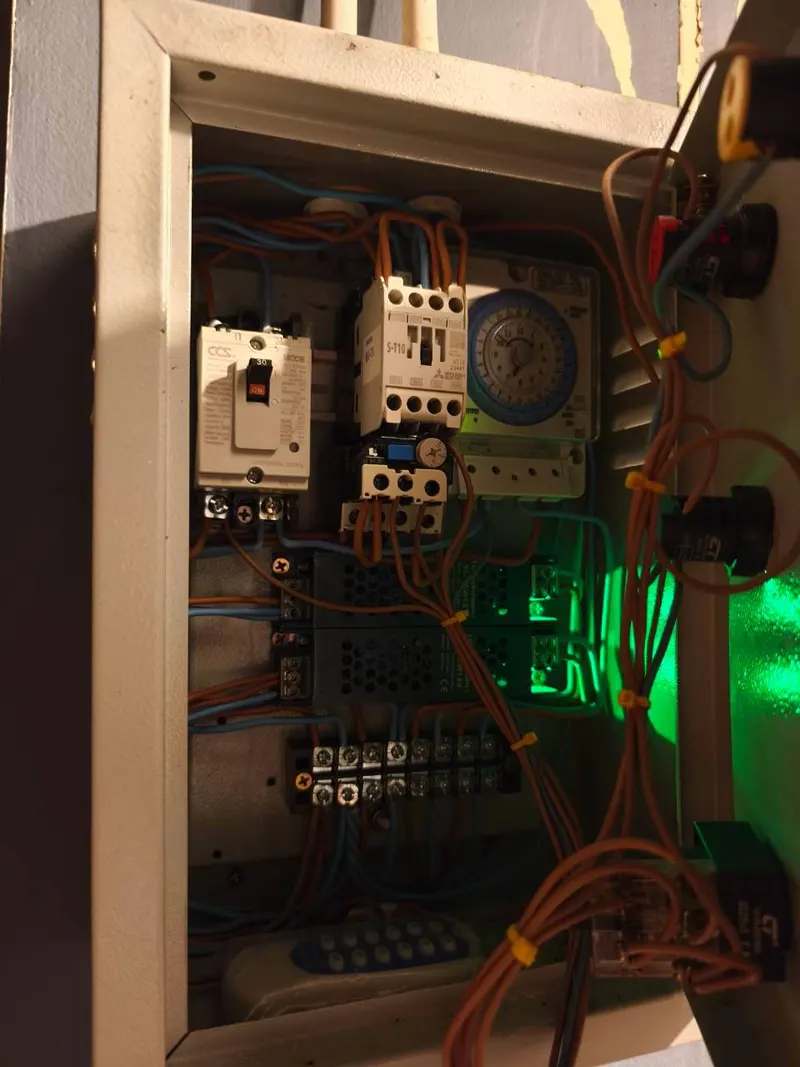
- Control panelWhere it is, how damp it is, and whether it is safe
- Water-quality checksHow you know the water is fine, and who checks it
Where should a swimming pool control panel be installed?
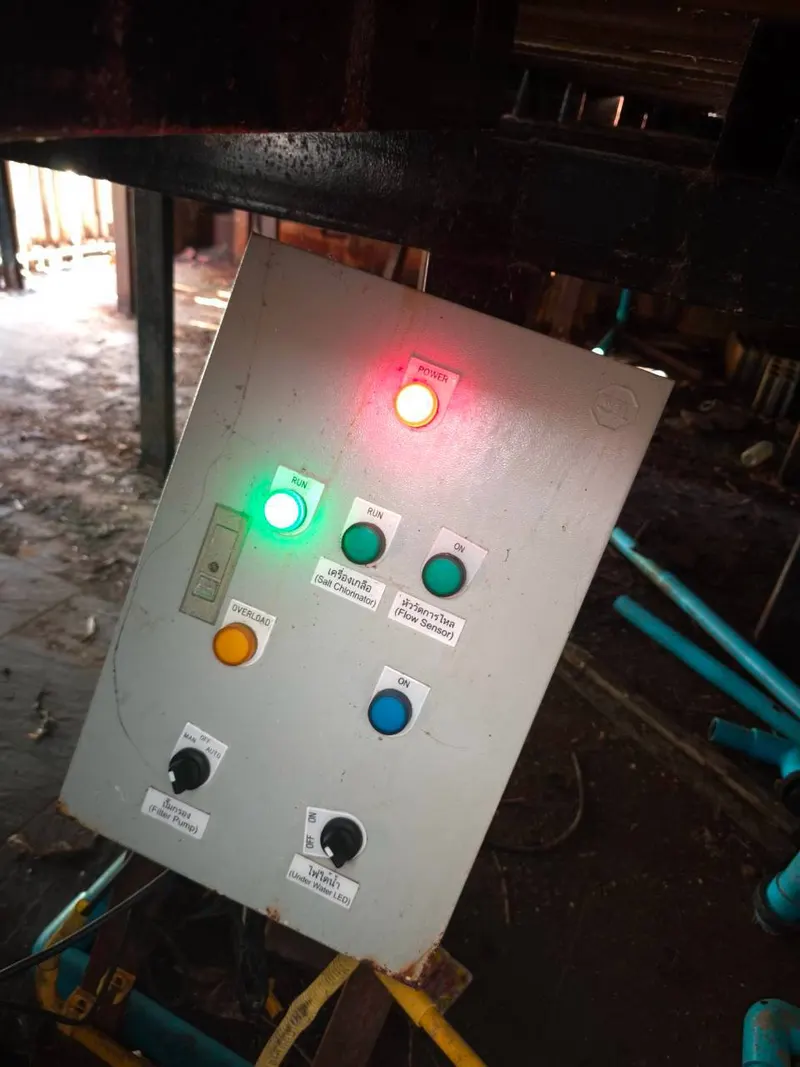
Both pools had control panel problems. At the first pool the panel was under a wooden floor where moisture builds up, so the enclosure can rust and damp can reach the equipment inside. At the second pool the panel did not meet safety standards.
A pool control panel is always close to water. If the equipment inside deteriorates or leaks current, it can endanger the people using the pool.
- Move the panel up onto a wall away from ground moisture, where it is easy to open, check and repair
- Replace the panel to standard with full protection devices, tidy wiring and every circuit labelled
- Leave room for online monitoring so the sensor inputs and monitoring equipment fit in the same panel
Engineer’s tip: If you open the panel and see rust, water stains or loose wiring, have it checked before equipment fails or current leaks.
What size salt chlorinator does a pool need?
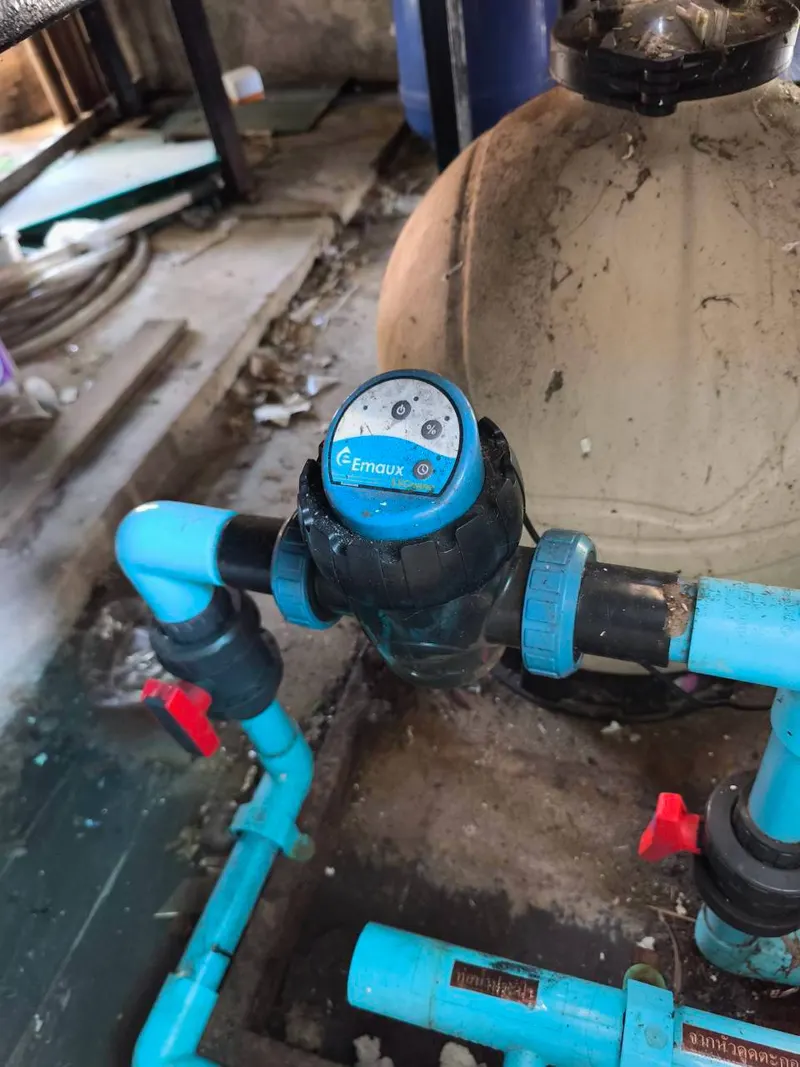
A salt chlorinator makes chlorine from the salt in the pool water. Its output is given in grams per hour (g/h) and must suit the pool volume. If it is too small it runs flat out all the time, there is not enough chlorine to disinfect, and it wears out sooner.
At the first pool (about 36.5 m³) the existing unit was too small for the pool, so we proposed replacing it with a suitable size, piped into the system correctly. The second pool (about 15 m³) had no chlorination at all, so we proposed installing a salt chlorinator of a suitable size.
Engineer’s tip: Salt runs out faster when many people use the pool, the top-up water is poor, or a lot of sunscreen and other chemicals get into the water. A salt chlorinator lasts about 3–5 years; clean the scale off its electrodes at every service.
How do you fix cloudy pool water?
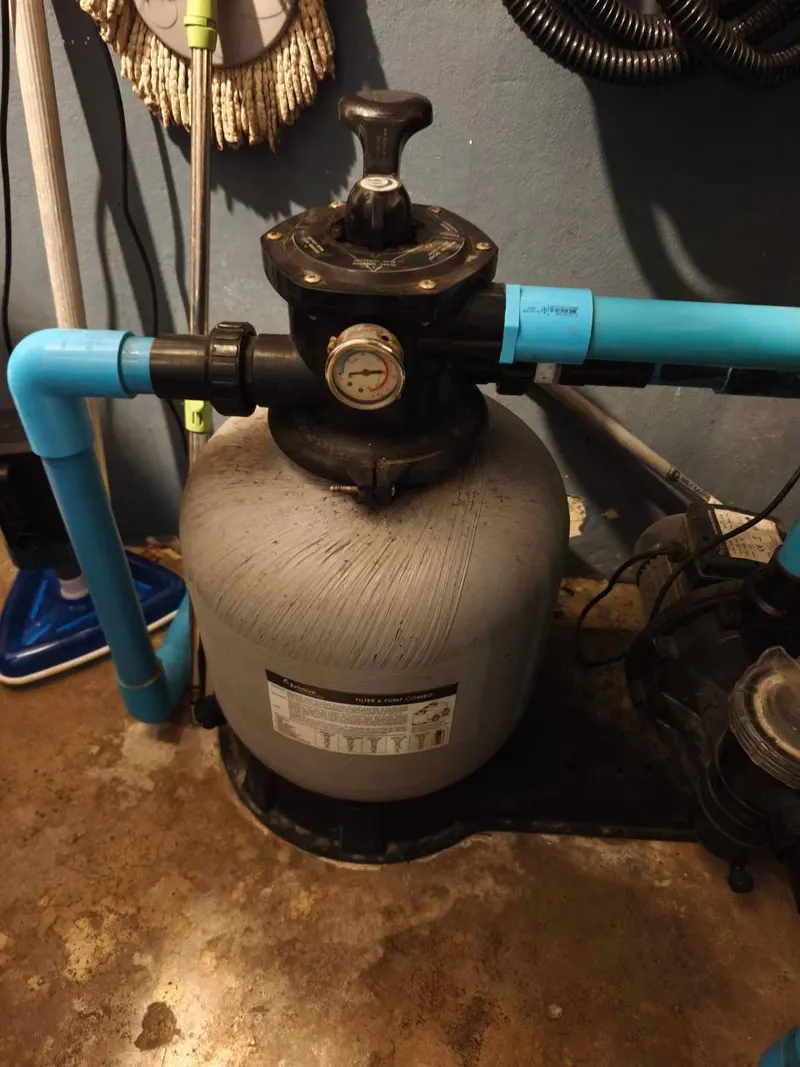
Cloudy water usually comes from the filtration. At the first pool the water was not passing through the sand filter, so we proposed a filter rated up to 15.6 m³/h to match the existing pump. The second pool already had a filter but the water was still not clear, so we proposed keeping the tank and replacing the media.
There are several kinds of filter media; choose by budget and how clear you want the water.
Engineer’s tip: Both pools are outdoors but have no vacuum line. Leaves and dust settle on the pool floor, so vacuum regularly; otherwise the water turns cloudy and the debris clogs the filter.
Can you fill a pool with well water?
Yes, but treat it first. The second pool was topped up from a well with high iron content and no treatment. Iron discolours the water, stains the pool walls and clogs the filter quickly.
We proposed an iron filter filled with manganese media to treat the well water before it goes into the pool.
How do you know the pool water is fine without checking every day?
Neither pool had any water-quality monitoring, so problems only showed once the water turned cloudy or a unit showed an error. We proposed sensors and an online system so the system adjusts itself and warns before problems start.
- pH, EC and ORP sensors measure water quality continuously, control how much chlorine is produced, and warn when salt needs topping up
- Filter pressure sensor shows as soon as the filter starts to clog and reminds you to backwash, with no need to read the gauge in person
- Online monitoring see the pump, chlorinator and water readings on your phone in real time
How often should a pool system be serviced?
We proposed a service every 2 months (6 a year), with online monitoring in between. If anything goes wrong, the owner is told straight away. Each visit covers:
- Check the electrical system and sensors
- Calibrate the water-quality sensors
- Check the filter and backwash it if it is clogging
- Check the salt chlorinator and clean scale off the electrodes
- Check the pump and circulation
- Test pH and salt level with a test kit
Engineer’s tip: Water-quality sensors last about 3 years on average, depending on the water.
What the cost depends on
- Pool volumeSets the chlorinator and filter size
- Existing equipmentWhether the pump, filter and panel can stay
- Top-up waterWhether well water needs treating first
- Level of monitoringHow many sensors, and whether you want it on your phone